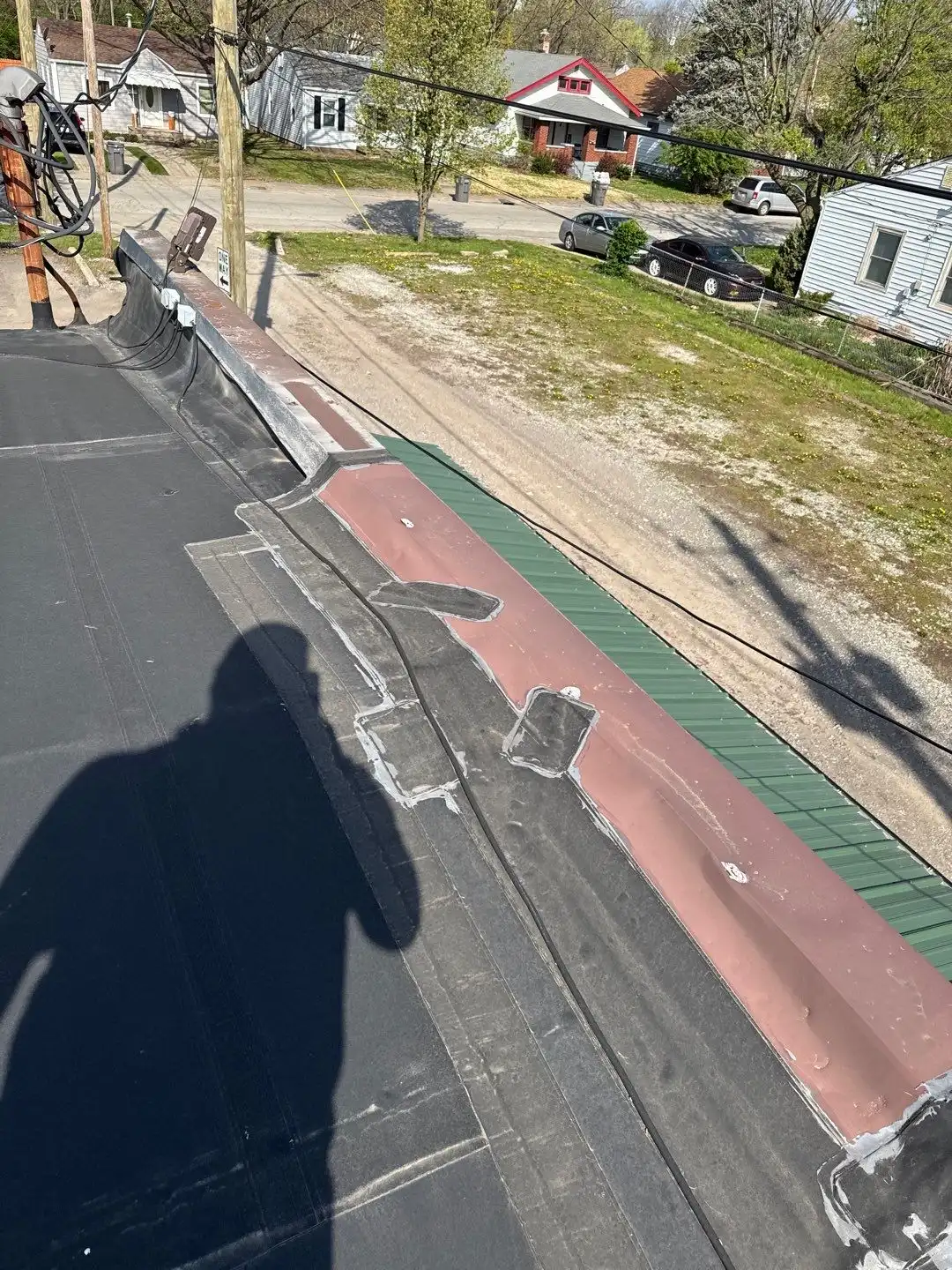
What ponding water is and why it matters
Understanding ponding water starts with knowing what it is and why it is a problem, because a Fortville owner who grasps the issue is better positioned to address it. Ponding is more than a cosmetic concern, it is a genuine threat to the roof.
What counts as ponding
Ponding water is standing water that remains on a flat roof for an extended period after rain, commonly described as water that has not drained within a couple of days. A flat roof is designed with enough slope to shed water, even if the slope is slight, so water that lingers indicates the roof is not draining as it should. For a roof, occasional brief puddles that clear quickly are normal, while water that stands for days is ponding and a sign of a problem.
Why flat roofs are supposed to drain
Despite the name, flat roofs are not truly flat, they are built with a slight slope, internal drains, scuppers, or other means to move water off the roof, because standing water is harmful to roofing materials. The whole system is designed to keep water flowing off rather than pooling. When water ponds on a Hancock County roof, it means this drainage design is being defeated somehow, which is the underlying issue ponding reveals and the thing that needs correcting.
Why ponding is a serious problem
Ponding matters because standing water steadily damages a roof, stressing the membrane, accelerating wear, and increasing the risk of leaks and structural strain. It is one of the most common reasons flat roofs fail before their expected lifespan. For a Fortville building, ponding is not something to tolerate as a quirk of the roof, it is an active problem that shortens the roof's life and should be addressed, which is why understanding and fixing it matters.
Ponding is a solvable problem
The encouraging reality is that ponding, while serious, is a solvable problem with identifiable causes and effective fixes, so a owner who notices standing water can do something about it. Recognizing ponding for what it is, a drainage failure that harms the roof, is the first step toward correcting it. The rest of this guide covers the causes, the damage, and the fixes, so you can address ponding on your roof.
Get ponding on your roof assessed
The broader point about ponding is that it is both a symptom and a cause, a symptom of a drainage failure and a cause of accelerated roof deterioration, which is why it deserves prompt attention. A Fortville owner who treats standing water as the warning it is, rather than a harmless feature of a flat roof, addresses the drainage problem before it shortens the roof's life. The roofs that reach their full span are the ones whose owners kept water moving off them, which is exactly what fixing ponding accomplishes.
Finally, preventing ponding is far easier than repairing the damage it causes, which makes maintenance and proper drainage design worthwhile investments. A owner who keeps drains clear, monitors the roof for new low spots, and ensures proper slope on any new roof avoids the steady harm standing water does. That preventive attention, keeping water moving off the roof, protects the roof's life at a fraction of the cost of dealing with the deterioration, leaks, and structural strain that ponding eventually brings.
It also helps to address the cause rather than the symptom, because simply removing standing water once does nothing if the drainage failure that created it remains. A Hancock County owner who insists on identifying why the roof ponds, inadequate slope, deflection, clogged drains, and fixing that underlying cause gets a lasting solution, while one who only clears the water temporarily will see it return. The effective fix is the one that restores the roof's ability to drain, which is what separates a real solution from a temporary patch.
The broader point about ponding is that it is both a symptom and a cause, a symptom of a drainage failure and a cause of accelerated roof deterioration, which is why it deserves prompt attention. A Fortville owner who treats standing water as the warning it is, rather than a harmless feature of a flat roof, addresses the drainage problem before it shortens the roof's life. The roofs that reach their full span are the ones whose owners kept water moving off them, which is exactly what fixing ponding accomplishes.
Finally, preventing ponding is far easier than repairing the damage it causes, which makes maintenance and proper drainage design worthwhile investments. A owner who keeps drains clear, monitors the roof for new low spots, and ensures proper slope on any new roof avoids the steady harm standing water does. That preventive attention, keeping water moving off the roof, protects the roof's life at a fraction of the cost of dealing with the deterioration, leaks, and structural strain that ponding eventually brings.
It also helps to address the cause rather than the symptom, because simply removing standing water once does nothing if the drainage failure that created it remains. A Hancock County owner who insists on identifying why the roof ponds, inadequate slope, deflection, clogged drains, and fixing that underlying cause gets a lasting solution, while one who only clears the water temporarily will see it return. The effective fix is the one that restores the roof's ability to drain, which is what separates a real solution from a temporary patch.
The broader point about ponding is that it is both a symptom and a cause, a symptom of a drainage failure and a cause of accelerated roof deterioration, which is why it deserves prompt attention. A Fortville owner who treats standing water as the warning it is, rather than a harmless feature of a flat roof, addresses the drainage problem before it shortens the roof's life. The roofs that reach their full span are the ones whose owners kept water moving off them, which is exactly what fixing ponding accomplishes.
Finally, preventing ponding is far easier than repairing the damage it causes, which makes maintenance and proper drainage design worthwhile investments. A owner who keeps drains clear, monitors the roof for new low spots, and ensures proper slope on any new roof avoids the steady harm standing water does. That preventive attention, keeping water moving off the roof, protects the roof's life at a fraction of the cost of dealing with the deterioration, leaks, and structural strain that ponding eventually brings.
Fortville Commercial Roofing assesses ponding water on Fortville flat roofs, identifying the cause and recommending the fix. Call (765) 676-3491 to get the standing water on your roof addressed. Correcting ponding before it does more damage is what separates a smart investment from an expensive guess.